Searching for Black Service Providers
Students reflect on their experiences navigating Black cosmetic service providers at Northwestern and in Evanston

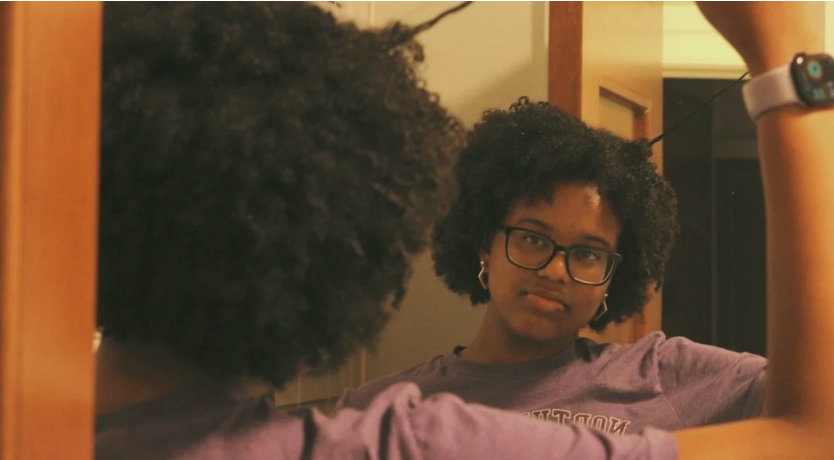
Along with a flurry of exams, clubs and internship applications, Naomi Tewelde, a Black first-year, said there’s one more thing stressing her out: finding a hair stylist that specializes in Black hair care.
“I feel like a lot of the surrounding hair care providing spaces are predominantly for white hair,” Tewelde said.
Black students make up 13% of Northwestern’s population. Tewelde said the small population makes it difficult to make friends and even more difficult to find hairstylists, nail techs and other service providers. As braids and nails grow out, and fresh cuts fade, she said students must rally together to navigate the scarcity of Black service providers on campus.
One way Black students look for service providers is by sending messages in the “We Are Family” GroupMe. However, their questions usually go unanswered, pushing students to look for providers outside of Evanston. But, even those searches are unsuccessful. Tewelde said with the lack of options, many students feel the need to settle for subpar services.
“There isn’t always that luxury of choosing based on quality because that pool of available providers is so small to begin with," she said. "So, we have to compromise on certain things that other students—students without the texture that a lot of Black people have—[don’t] have to think twice about.”
However, Tewelde said students can sometimes rely on the Black service providers among Northwestern’s student body.
Aji Nureni-Yusuf, a sophomore studying political science and psychology, offers natural nail and gel manicures ranging from $18 to $65. She said she started out doing her own nails over the summer before coming to Northwestern. And upon realizing there was a lack of affordable nail techs in the area, she decided to fill the gap.
“I was shocked to learn that there aren’t really that many here at Northwestern and even in Evanston,” Nureni-Yusuf said. “So, I decided to be that person.”
Among the new class of 2030, there are students who also brought their skills to Northwestern. One student is Ephrata Tesfaye, a political science major, who specializes in braids and locs.

Tesfaye began braiding about six years before she started her business last year. Now offering braids, retwists and cornrows for less than $100, she’s motivated to continue where she left off in Evanston after seeing the need for affordable Black hair maintenance.
“Being a PWI, I knew that, I guess for lack of better words, there wouldn’t be much competition,” Tesfaye said. “I assumed that this would be a service that’s in demand because Evanston isn’t really a place where you can find a lot of affordable braiders.”
Because there isn’t much representation for Black students on campus, Tesfaye said it’s “really important” for Black students to find ways to uplift each other. She said that going to one another for services is one way to show support. Nureni-Yusuf also said it’s important to appreciate Black entrepreneurs for the “very specific niches” they offer their fellow students. Additionally, she said their experiences as business owners foster resilience, problem solving and critical thinking in ways the classroom does not.
Nureni-Yusuf said that she hopes to extend her services to the Black community more often in the future, as she hasn’t had many opportunities to do so. Like people looking for service providers, Nureni-Yusuf has also tried reaching out and advertising in campus groupchats. While it’s hard, she said she’d still love to venture out.
Tesfaye said there’s a distinct kind of intimacy that comes with the experience of getting a cosmetic service. The conversations she has with her clients is one of the reasons she enjoys doing hair. Whether it’s as simple as how their day has been or a discussion on pressing issues in the Black community, she said she finds that she can achieve “a new dimension of a friendship” with her clients.
“The ability to help someone feel beautiful about themselves,” Tesfaye said, “especially for Black people—because we are not the beauty standard, and beauty industries and communities on campus and predominantly white spaces in general do not see us as the beauty standard—to be able to do that for each other is so important.”


Comments